
By
Director of Climate Science & Impact
Edited: 3 Mar 2026
8 min read



More than 1,700 companies across 56 countries are now using internal carbon pricing to shape investment decisions and strengthen their climate strategies, according to a 2025 analysis by the World Business Council for Sustainable Development (WBCSD) and Boston Consulting Group. Adoption has almost doubled since 2021, showing just how quickly internal carbon pricing is becoming part of mainstream business planning.
Internal carbon pricing assigns a monetary value to the greenhouse gas emissions produced across your operations and supply chain. It brings climate impact into the same budget and planning discussions that guide all business decisions, from procurement choices to long-term capital investments. Once emissions come with a financial cost, it becomes far easier to see where the biggest reduction opportunities lie and how to prioritise action.
For sustainability teams, internal pricing can become a practical lever to accelerate emissions reduction and strengthen a net zero strategy. Finance teams get a clearer way to model risk, test scenarios and align long-term business planning with transition roadmaps. And for the organisation as a whole, internal carbon pricing builds a shared understanding of what responsible climate action looks like in financial terms.
This guide explains how internal carbon pricing works, the types of systems you can use and how to bring the right people on board. It also explores how pricing fits into Ecologi’s 3Rs framework and highlights examples from organisations that have already put a price on carbon.
What is internal carbon pricing?
Internal carbon pricing is a voluntary decision by a company to put a financial value on its own emissions. Although it mirrors market-based concepts such as carbon taxes or emissions trading schemes, the aim is different. Internal pricing gives businesses an early, flexible way to understand how carbon costs influence decisions and to prepare for a world where carbon constraints are the norm.
A well-designed internal price gives teams a tool they can actually use, helping them compare projects on both cost and carbon, understand the long-term implications of procurement decisions and build a more credible net-zero strategy.
Understanding shadow carbon pricing vs internal carbon fees
Companies usually start with one of two approaches. A shadow carbon price applies an assumed cost to each tonne of emissions so teams can voluntarily factor carbon into investment decisions and long-term planning without any money changing hands. An internal carbon fee takes the idea further by assigning a real cost to emissions and directing the revenue into a climate fund that supports reductions or high-quality climate projects.
Why corporate leaders are adopting internal carbon pricing
Companies are adopting internal carbon pricing because it creates a direct financial incentive to decarbonise. When emissions carry a cost, it becomes far easier to prioritise reductions, phase out carbon-intensive activities and make low-carbon choices the default.
The timing also matters. External pressures are growing quickly. In Europe and the UK, regulatory timelines are tightening as carbon prices rise under the EU and UK Emissions Trading Systems and as the EU’s Carbon Border Adjustment Mechanism (CBAM) begins to phase in. Sector-specific rules in areas such as aviation, shipping and industrial manufacturing are creating clearer expectations for how carbon will be priced in the coming decade. Even companies outside regulated sectors are beginning to feel the effects as suppliers pass through carbon costs and customers ask for clearer evidence of decarbonisation progress.
Early adopters of internal carbon pricing report advantages such as stronger climate-related financial disclosure, clearer transition plans and more credibility with investors, regulators and partners. Many also say that pricing carbon internally helps them make faster, more aligned decisions because finance and sustainability teams can work from the same assumptions.
Companies also recognise that the cost of decarbonisation is changing. Analysts expect carbon removal and mitigation costs to rise significantly as high-quality supply tightens. Organisations that build internal carbon pricing into their planning now tend to secure better access to solutions, avoid sudden budget shocks and stay ahead of future cost increases.
Taken together, these trends explain why internal carbon pricing has moved from a niche practice to a mainstream part of climate risk management and net-zero planning. It helps businesses decarbonise more quickly while also preparing them for a policy environment where carbon has a rising and unavoidable cost.
Types of internal carbon pricing mechanisms
Companies use internal pricing in several ways, depending on their maturity and strategic goals. There are several carbon pricing mechanisms businesses can use, depending on maturity, data quality and strategic ambition.
Shadow carbon pricing
A shadow carbon price is a hypothetical value assigned to each tonne of emissions. Nothing is paid, but the price is applied when evaluating investment decisions, supplier options or long-term planning scenarios. It’s simple, low risk and accessible, especially for organisations taking their first steps into carbon management.
It can be used to evaluate investments, compare procurement options, test R&D ideas or support major financial decisions like mergers and acquisitions. Its main limitation is that it doesn’t generate funding for climate initiatives – it is, ultimately, hypothetical.
Internal carbon fee structures
An internal carbon fee goes further. Each department pays a set amount per tonne of emissions into a central climate fund, and that money is then used for emissions reduction projects, operational improvements or high-quality climate solutions as part of beyond value chain mitigation. Because the cost is real, it tends to shift behaviour more quickly.
The funds generated are set aside for climate-related activities: upgrading equipment, improving energy efficiency, supporting suppliers or investing in high-quality carbon and nature projects. It also means the company is better prepared if and when external carbon pricing becomes mandatory.
Introducing a carbon fee typically involves piloting the idea, engaging stakeholders and gradually increasing the price as internal capability grows.
Market-based or benchmark-linked carbon pricing models
Some companies peg their internal price to external indicators, such as the cost of permanent carbon removal or the price of allowances in compliance carbon markets. This helps ensure their internal assumptions reflect external realities and supports stronger long-term planning.
How to choose the right internal carbon price model
Choosing the right model depends on your sector, emissions profile, data quality and strategic ambition. A helpful question to ask is: what are we trying to achieve? If the goal is to stress-test decisions, a shadow price may be enough. If you want to unlock budget for emissions reductions or funding climate and nature projects, an internal fee usually delivers more impact.
Above all, the price should be high enough to influence decisions, robust enough to stand up to scrutiny and flexible enough to evolve as your net zero strategy matures.
Maturity stage | Characteristics | Price model | Why this works |
|---|---|---|---|
Early / exploring | Limited data, no internal precedent, sustainability team–led | Shadow price | Low-friction entry point, good for scenario modelling |
Intermediate / building capability | Better carbon data, finance engagement, early net zero planning | Internal carbon fee | Creates real budget signals and funds projects |
Advanced / aligning to science | Strong data, leadership support, mature net zero strategy | Benchmark-linked price | Anchors decisions to true long-term costs and removal needs |
The business case for internal carbon pricing: financial, strategic and operational benefits
A well-designed internal carbon price brings climate and finance together in a practical, everyday way.
Carbon reduction impact
Putting a cost on emissions makes the climate impact of decisions more visible. This helps teams weigh alternatives more fairly and often reveals opportunities that would otherwise be missed. Pricing also helps prioritise actions in line with emissions reduction targets, particularly for categories of Scope 3 emissions where responsibility is shared across the value chain.
Financial planning and long-term risk management
Internal pricing gives finance teams a clearer way to model transition risks. It shows how regulation could affect operations or margins and highlights where assets or activities might be vulnerable in a low-carbon economy. With this insight, companies can make more confident, forward-looking decisions.
Capital access and green finance
Investors increasingly expect companies to demonstrate credible climate plans, including well-defined carbon management strategies. Internal carbon pricing supports this by providing structure, evidence and transparency. It can also strengthen the case for green finance and improve ESG ratings.
Competitive advantage and stakeholder value
A clear approach to internal carbon pricing signals commitment. It gives employees a concrete way to understand the company’s goals, helps customers see the link between actions and outcomes and supports stronger relationships with suppliers and partners. It also differentiates businesses that are preparing for the future from those reacting to it.
How to implement internal carbon pricing in your organisation: a 5-step framework
Step 1: Measure your carbon footprint
Accurate accounting of your company’s carbon footprint is essential. This means collecting data across Scope 1, 2 and Scope 3 emissions through carbon accounting, gaining visibility into supply chain hotspots and validating assumptions where needed. Strong data helps ensure the carbon price is applied consistently and fairly. Carbon management platforms like Ecologi’s can make this process simpler.
Step 2: Set science-based carbon reduction targets
Long-term science-based targets provide clarity on what the business needs to achieve and when. They help ensure the internal carbon price supports your net zero strategy rather than short-term initiatives alone.
Step 3: Determine your carbon price methodology
Companies typically consider external benchmarks, the cost of high-quality carbon removal, or internal financial modelling. Many also use marginal abatement cost (MAC) curves, which map the cost of different emissions reduction opportunities and show the carbon price at which those actions become financially attractive. Prices often rise over time to reflect growing ambition and to encourage early investment in low-carbon solutions.
Step 4: Engage finance teams and leadership
Leadership support is crucial. Clear modelling, scenario analysis and a strong explanation of return on investment all help build alignment. Many organisations find that once leaders understand the financial logic behind internal pricing, conversations shift from hesitation to opportunity. Many companies structure C-suite discussions around three simple frames: financial risk exposure, resilience under multiple carbon price scenarios and costed pathways to net zero. This helps anchor carbon pricing in familiar board-level language.
Step 5: Integrate with procurement and operations
Carbon pricing has the most impact when it is embedded in the systems teams already use. This includes procurement processes, capital planning frameworks and operational decision-making. When carbon is part of the criteria, decisions start to change.
Integrating internal carbon pricing with Ecologi’s 3Rs framework
Internal carbon pricing fits naturally within Ecologi’s 3Rs framework (Reduce, Restore, Report).
Reduce: How pricing drives emission reduction behaviours
A price on carbon helps teams see the climate impact of their decisions more clearly.
When emissions carry a cost, low-carbon choices often become the practical choice as well as the sustainable one. Internal carbon pricing makes this shift easier by giving teams a simple signal they can use when comparing options, planning investments or reviewing operations. It also keeps reduction efforts aligned with science based targets by helping identify where the biggest opportunities lie across operations and supply chains.
Restore: Funding nature-based solutions through carbon revenue
Internal carbon fees provide a steady funding stream for climate projects, which is where the “Restore” part of Ecologi’s 3Rs framework comes in. By directing that revenue toward high-quality climate solutions, companies can support nature-based restoration projects, permanent carbon dioxide removal and balanced portfolios which are aligned with the Oxford Principles for Net-Zero Aligned Carbon Offsetting.
It also pays to act early. Modelling from BloombergNEF and VanderStyn, visualised by Visual Capitalist, shows that carbon removal costs could rise sharply as demand grows, potentially tripling by 2030 and increasing ninefold by 2035. For organisations with net zero goals, delaying removal only increases future budget exposure.
Using internal carbon fees to support climate projects now helps companies avoid these future cost spikes while securing access to high-quality supply.
Pricing projections
The pricing is based on forward-looking projections for different categories of carbon removal and mitigation projects. These projections incorporate market trends, technology advancement, and scaling expectations.
Year | Category I -Avoided fossil and carbon use and Category 2 -Emission reductions from biosphere | Category 3 - Carbon Removal (higher risk of reversal) | Category 4 - Carbon Removal (lower risk of reversal) |
|---|---|---|---|
2026 | £8.61 | £38.97 | £211.53 |
2027 | £8.83 | £39.96 | £203.39 |
2028 | £9.06 | £40.98 | £195.56 |
2029 | £9.29 | £42.03 | £188.03 |
2030 | £9.53 | £43.10 | £180.79 |
2035 | £10.81 | £48.88 | £148.56 |
2040 | £11.87 | £53.70 | £133.95 |
2045 | £13.04 | £59.00 | £120.77 |
2050 | £14.33 | £64.83 | £108.89 |
Source data: McKinsey
Important to Note:
Category V does not include DAC (Direct Air Capture) - only Biochar & Enhanced Rock Weathering
All pricing is significantly dependent on project type volumes
All pricing is based on list prices - volume & partnership discounts are available on a case by case basis
Report: Transparent carbon accounting and disclosure
Clear reporting brings your internal carbon pricing strategy to life.
It helps teams and stakeholders understand how the price works, what it funds and the progress it supports. Linking internal pricing to recognised frameworks such as the GHG Protocol, TCFD and wider climate-related financial disclosure also builds credibility.
By showing how pricing informs decisions and strengthens climate governance, companies can communicate their net zero strategy with greater confidence and transparency.
Carbon pricing implementation: case studies and real-world validation
University of Derby: putting an internal carbon price at the centre of a major capital project
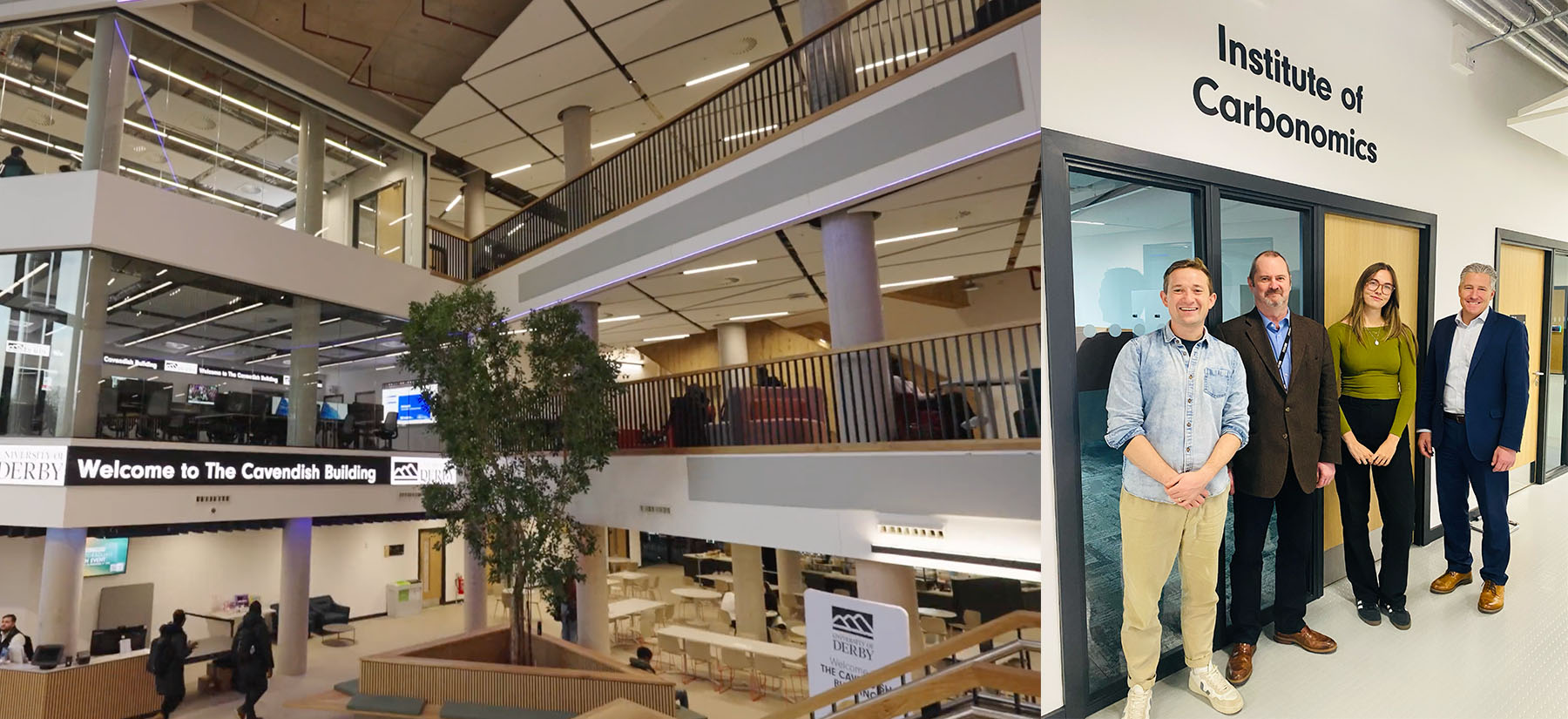
The University of Derby used internal carbon pricing to guide the design and construction of its new Cavendish Building, a flagship centre for the Derby Business School. Working with CPW, the project team applied a £70/tCO₂e internal carbon fee in line with UK Green Building Council (UKGBC) guidance, making carbon a visible part of every design and material decision.
This early price signal helped drive down emissions at the source. The contractor and supply chain committed contractually to minimising CO₂ output, supported by a specialist consultant overseeing material choices, logistics and construction methods. These measures reduced the embodied carbon footprint significantly, including through recycled materials, lower-carbon cement mixes and a redesigned structural frame that cut concrete volumes without compromising strength.
After reduction, 6,652 tCO₂e of unavoidable embodied carbon remained. The internal carbon fee generated a dedicated fund to address these residual emissions through an Oxford Principles–aligned portfolio of high-quality carbon projects. The University invested in a balanced mix of removals and avoidance credits - including biochar, blue carbon and afforestation – with full transparency provided via Ecologi’s platform.
Any remaining budget was channeled into a Transition Fund, following the UKGBC’s “leading approach”. This additional investment supported local peatland restoration in Derbyshire, building long-term resilience and connecting the project to the University’s broader research into soil health and ecosystem recovery.
Jaime Oliver, Senior Sustainability Consultant at CPW for University of Derby said:
"We were very keen not to be seen as greenwashing, or making claims that we couldn’t back-up. Ecologi impressed us in their approach, their transparency, and the portfolio of projects. And they’ve also got a level of credibility which other companies weren’t offering."
The Cavendish Building shows how internal carbon pricing can reinforce low-carbon design, ensure responsible use of carbon credits for offsetting and create space for innovation even in complex capital projects.
Third-party endorsement: Who supports internal carbon pricing?
Internal carbon pricing is widely supported across the climate, governance and sustainability community. Global coalitions and expert bodies consistently point to it as one of the most practical tools for preparing organisations for a net-zero economy.
International organisations
International initiatives such as the Carbon Pricing Leadership Coalition (CPLC), hosted by the World Bank, regularly highlight internal carbon pricing as a core practice for managing transition risk and strengthening corporate net-zero strategies. CDP takes a similar position. Through its practitioner guides (“What is internal carbon pricing?”) and “how-to” resources, CDP recommends internal pricing as a way for companies to bridge the gap between current policy prices and the levels needed for a 1.5–2°C pathway.
The WBCSD also champions internal carbon pricing. Its guidance on decision-making, procurement and financial integration positions internal pricing as a direct way to embed climate thinking into everyday business processes.
Climate governance initiatives
The Climate Governance Initiative urges boards to consider internal pricing as a practical step to prepare for net-zero transition, drawing on benchmark ranges from the High-Level Commission on Carbon Prices. Oxford Net Zero has also designed guidelines for setting net-zero-aligned internal carbon prices.
Economists
Economists and expert commissions add weight to this guidance. The High-Level Commission on Carbon Prices, co-chaired by Joseph Stiglitz and Nicholas Stern, has set out widely used carbon price ranges aligned with the Paris Agreement.
Sector-specific groups
Industry networks such as the UK Green Building Council and the Better Buildings Partnership frequently advocate for corporate carbon pricing as part of a credible net zero strategy.
Taken together, these perspectives highlight a strong consensus: internal carbon pricing is one of the clearest, most actionable tools companies can use to guide decision-making in line with a net-zero future.
Work with Ecologi to design a credible internal carbon pricing strategy
A well-designed internal carbon price helps you reduce emissions, prepare for regulation and fund high-quality climate projects. With Ecologi’s 3Rs framework, you can build a pricing model that is credible, practical and aligned with your net zero strategy.
We support more than 16,000 businesses, including hundreds of B Corps.
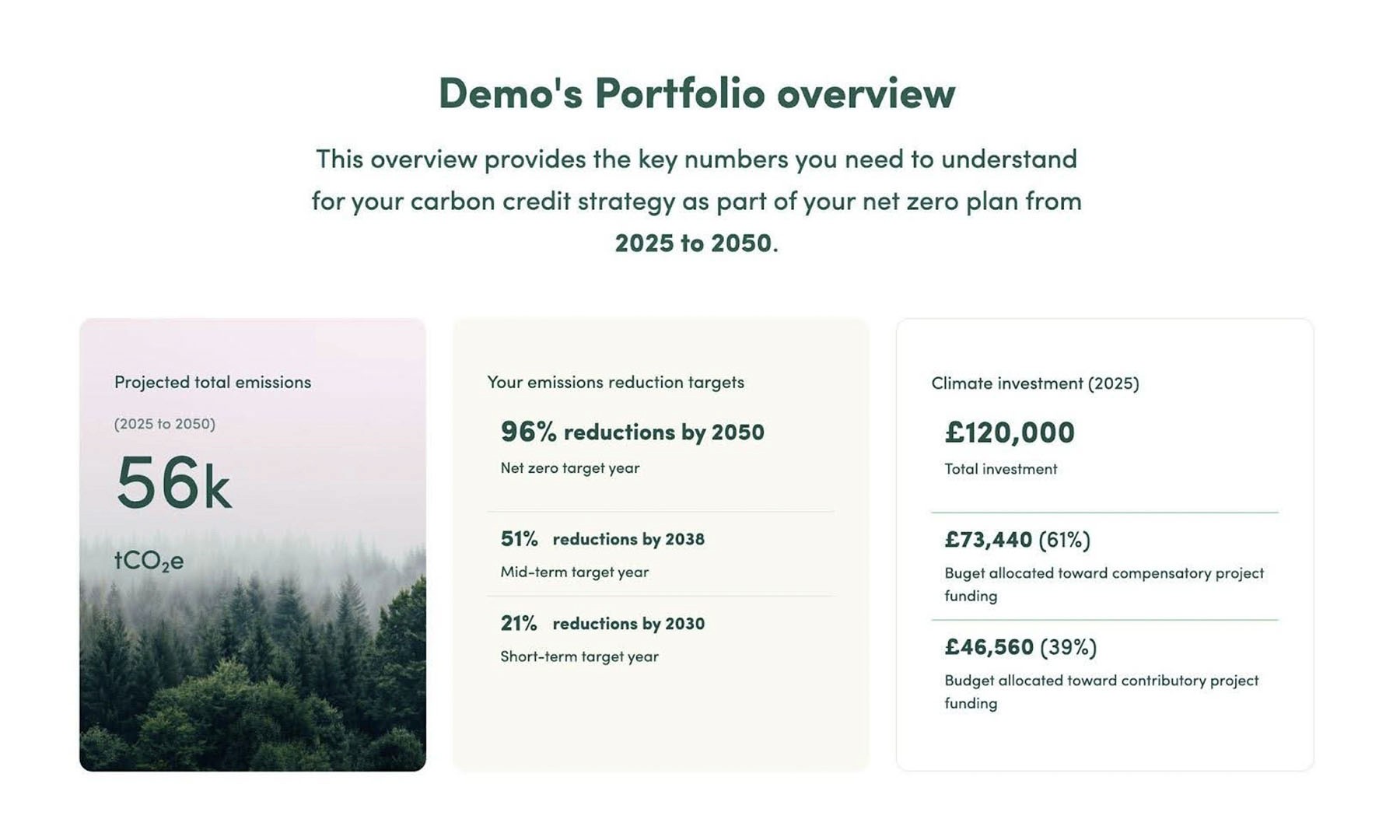
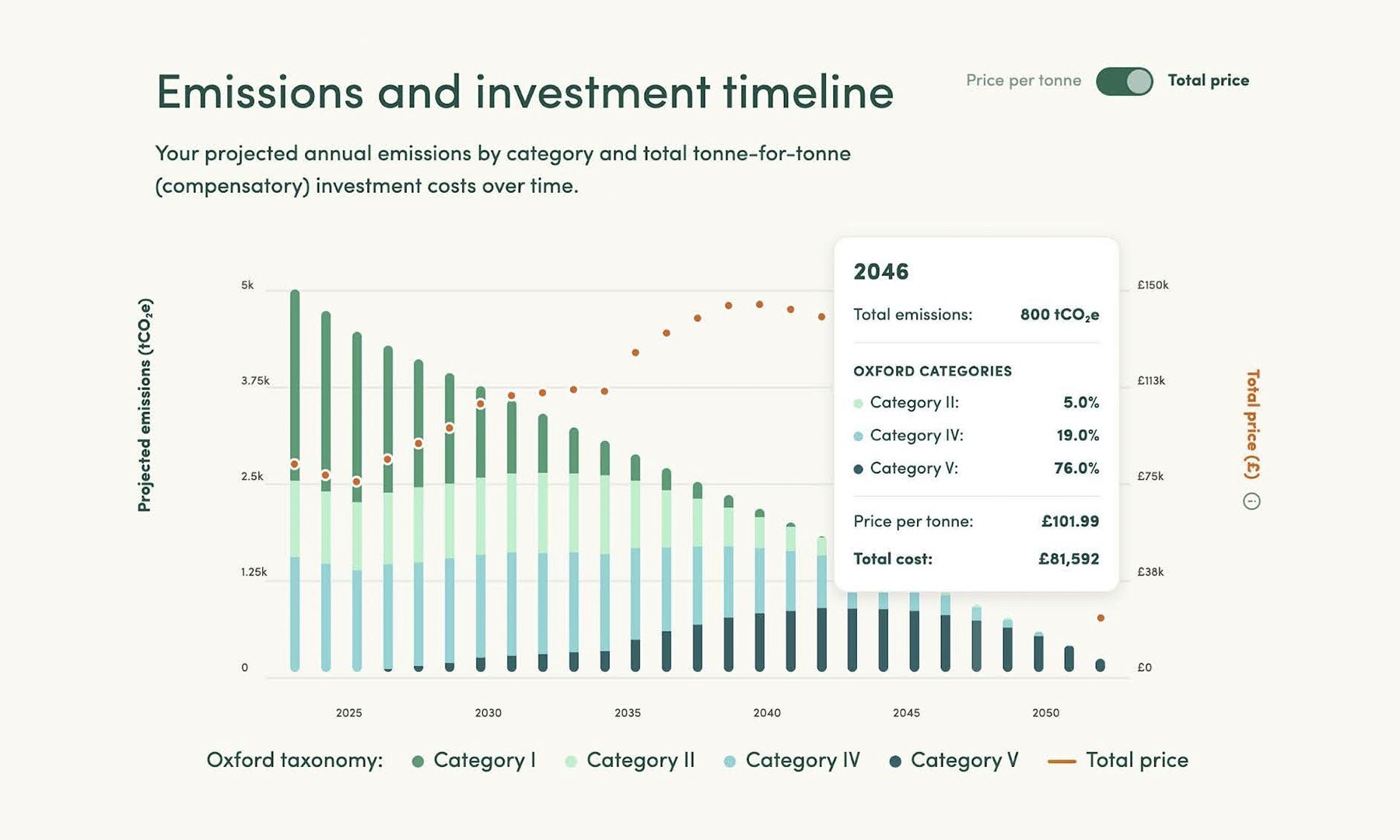
When you begin your journey with Ecologi, we’ll help you use our portfolio calculator to design the best carbon credit procurement strategy for your sustainability targets. It might look something like this:
If you’re ready to explore internal carbon pricing for your organisation, our climate experts can help.